Clearing out a full house is rarely just a chore. Whether you're settling a loved one's estate, handling a probate property, or helping a parent downsize, every drawer can hold a memory. Take your time, be gentle with yourself, and lean on a plan. This estate cleanout checklist walks Vancouver, WA families through the whole process step by step, so nothing important gets lost and the overwhelming feels manageable.
There's no prize for finishing fast. Protect what matters, honor the memories, and let the rest go at a pace that feels right for your family.
Before You Begin: Plan and Protect
The biggest mistake people make is diving into the nearest closet before securing the essentials. A little planning up front saves days of stress later. Start by understanding the legal picture: if the home is in probate, confirm with the executor or attorney that you're clear to distribute and remove belongings. Never toss anything until you know who has authority to decide.
Secure Documents and Valuables First
Before any sorting begins, do a careful sweep for the things that are easy to accidentally throw away. Older generations often hid cash, jewelry, and important papers in surprising places, taped under drawers, tucked in book pages, or folded inside coat pockets.
- Wills, trusts, deeds, titles, and insurance policies
- Bank statements, tax records, and account information
- Social Security cards, passports, and birth certificates
- Cash, checkbooks, and savings bonds
- Jewelry, watches, coins, and small collectibles
- Medications (set aside for safe disposal)
- Keys, safe combinations, and deposit box information
Gather these into a locked box or a bag you keep with you. Shred anything with sensitive information once the estate is settled rather than tossing it in the trash.
Set Up Your Sorting System
Decide on your categories before you touch a single item, and label areas or bins clearly. A simple four-way system keeps decisions moving:
- Keep — sentimental or useful items family members want
- Sell — furniture, antiques, and goods with resale value
- Donate — usable items a Clark County charity can rehome
- Toss — broken, worn, or unusable items headed for the dumpster
Loop in family early. Ask relatives what they'd like to claim before anything leaves the house. It prevents hard feelings and makes sure treasured items find the right hands.
Choosing the Right Dumpster and Planning Swaps
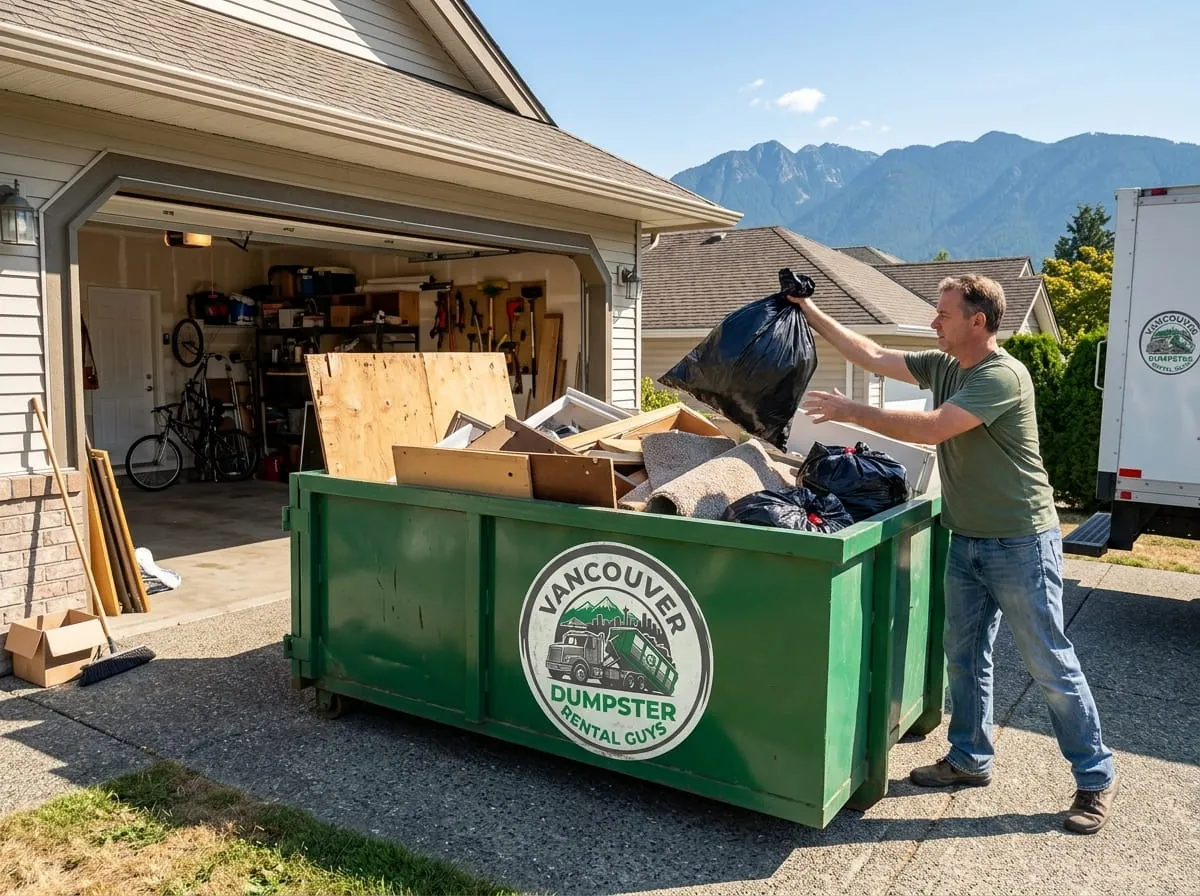
A full-property cleanout produces more debris than most people expect, and renting the right container makes everything smoother. For a typical two- or three-bedroom home in Vancouver, a 20-yard dumpster is the sweet spot, big enough for furniture, boxes, and general household junk without taking over the whole driveway. Larger estates or homes with decades of accumulation may need a bigger container or a second haul.
Don't worry about guessing perfectly. If you fill up faster than planned, we offer swap-outs, we haul the full container away and drop an empty one so you can keep working without losing momentum. For bulky or heavy specialty items you'd rather not lift into a bin, our junk removal service can do the loading for you. If you're unsure which size fits your situation, reach out and we'll help you plan it out.
Ready to get a container on site? Call (360) 360-3683 and we'll deliver to your Vancouver or Clark County property, often the next day.
Room-by-Room Cleanout Order
Working room by room keeps you focused and gives you a visible sense of progress. Start with the lowest-emotion, highest-clutter spaces, garages, basements, and storage, then move toward the personal rooms once you've built momentum and confidence in your sorting system.
| Room | Common Items | Approach |
|---|---|---|
| Garage & Shed | Tools, paint, chemicals, yard equipment | Start here to build momentum. Set aside hazardous materials (paint, solvents, propane) for proper disposal, they can't go in the dumpster. |
| Basement & Attic | Boxes, holiday decor, old furniture | Open every box, valuables and documents hide here. Toss water-damaged and mildewed items; donate the rest. |
| Kitchen | Dishes, small appliances, pantry goods | Donate unopened non-perishables to a food bank. Box usable cookware for donation; toss chipped or worn pieces. |
| Living & Dining | Furniture, electronics, decor | Photograph quality pieces for resale first. Large furniture that won't sell goes to donation pickup or the dumpster. |
| Bedrooms | Clothing, linens, personal effects | The most emotional rooms, save for later. Bag clothing and linens for donation; keep meaningful keepsakes. |
| Bathrooms | Toiletries, medications, towels | Dispose of medications safely. Toss opened toiletries; donate unused, sealed products and clean linens. |
| Home Office | Papers, files, electronics | Sort documents carefully before shredding. Recycle old electronics at an approved e-waste site. |
For a deeper breakdown of tackling each space, our room-by-room home cleanout checklist pairs perfectly with this guide.
Your Estate Cleanout Checklist
Print this out or keep it on your phone and check off each step as you go:
- ☐ Confirm legal authority to distribute and remove belongings
- ☐ Secure documents, valuables, cash, and medications
- ☐ Set up your keep / sell / donate / toss system
- ☐ Invite family to claim sentimental items
- ☐ Photograph and list items worth selling
- ☐ Book the right dumpster size (a 20-yard fits most homes)
- ☐ Work room by room, garage and storage first
- ☐ Set aside hazardous materials and e-waste for proper disposal
- ☐ Schedule donation drop-offs or pickups in Clark County
- ☐ Arrange a dumpster swap-out if you fill up early
- ☐ Do a final walk-through before the home changes hands
Donation Options in Clark County
Rehoming usable items is one of the kindest parts of a cleanout, it honors the life that filled the home and keeps good things out of the landfill. Clark County has several organizations that welcome gently used goods:
- Habitat for Humanity ReStore — furniture, appliances, building materials, and home goods, with pickup available for larger items
- Goodwill and Salvation Army — clothing, housewares, books, and small furniture
- Local food banks — sealed, unexpired pantry goods
- Animal shelters — clean towels, blankets, and old linens
- Community reuse groups — Buy Nothing groups and local nonprofits for niche items
Call ahead to confirm what each organization accepts, as guidelines change. Keep receipts for donated goods, they may be tax-deductible for the estate.
Emotional and Logistical Tips
Grief and to-do lists make a heavy combination. Be patient with the people helping you, and with yourself. A few things that make the process kinder:
- Pace yourself. Break the work into short sessions rather than marathon days. Emotional fatigue is real.
- Bring support. A friend or neutral helper can make decisions easier when sentiment clouds judgment.
- Preserve memories, not everything. Photograph items you can't keep, and consider saving a small memento rather than a whole set.
- Handle disagreements gently. When two people want the same item, step away and revisit it later.
- Ask for help with the heavy lifting. You don't have to carry decades of belongings by yourself.
If the scale of the project feels like too much, our full-service estate cleanout team can handle the sorting, hauling, and disposal so your family can focus on what matters most. We serve Vancouver WA and all of Clark County with compassion and no judgment.
We're Here When You're Ready
An estate cleanout is a big undertaking, but you don't have to face it alone. With a clear checklist, the right dumpster, and a little grace for yourself, you can move through it one room at a time. When you're ready for a container or a helping hand, the Vancouver Dumpster Rental Guys are a phone call away. Call (360) 360-3683 today and we'll help you plan the cleanout that fits your home, your timeline, and your family.
Founder, Vancouver Dumpster Rental Guys — sharing straight advice from more than 15 years of local hauling experience.