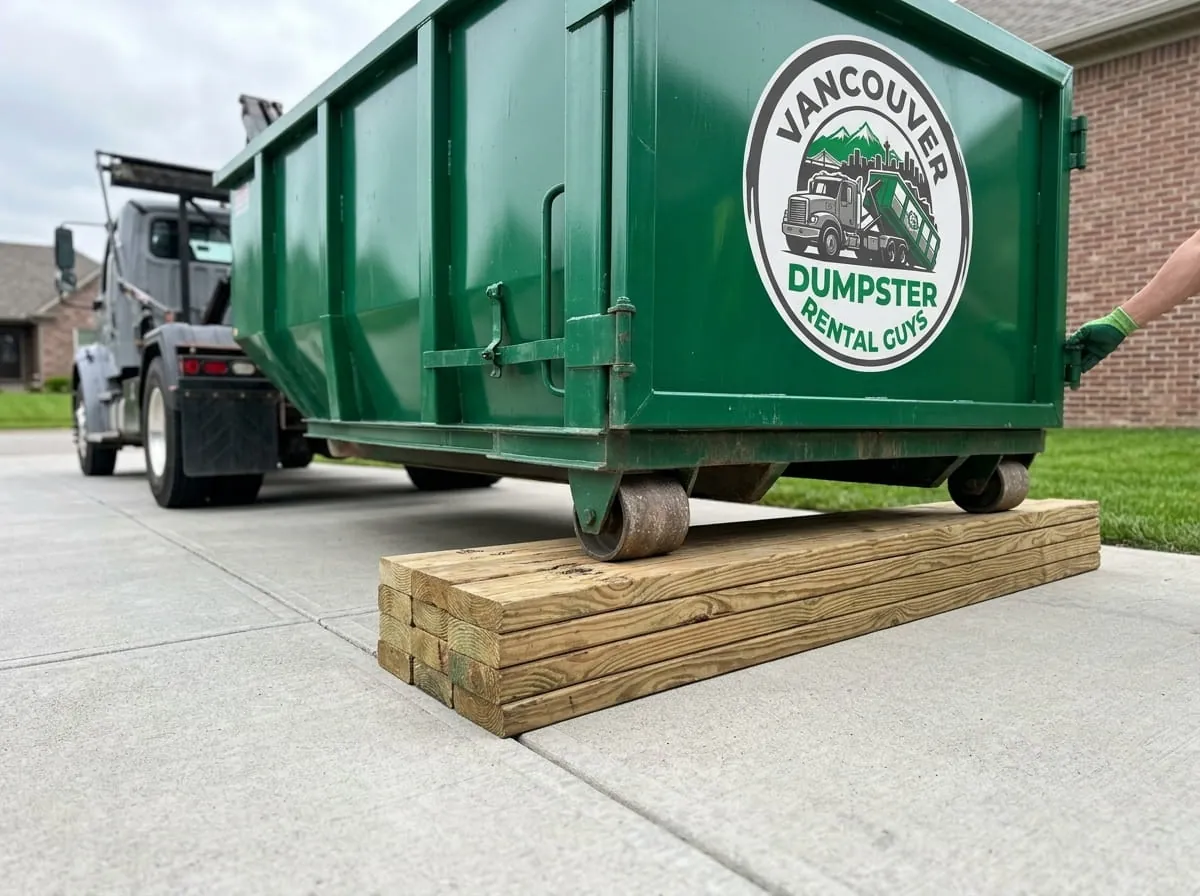
A roll-off dumpster is one of the most useful things you can park in your driveway during a cleanout, remodel, or roofing job. It is also one of the heaviest. An empty 20-yard container already weighs a couple of tons, and once you start filling it with shingles, drywall, concrete, or waterlogged yard debris, the load on your driveway climbs fast. Add a Vancouver winter of steady rain softening the ground underneath, and you have a real recipe for cracks, stains, and gouges if nobody plans ahead.
The good news: driveway damage is almost always preventable. With a little prep and a delivery crew that knows what they are doing, your concrete, asphalt, or pavers should look exactly the same the day the dumpster leaves as they did the day it arrived. Here is how we protect your driveway here in Vancouver and Clark County, and what you can do on your end to help.
How a Heavy Roll-Off Can Damage a Driveway
Understanding the three ways damage happens makes it a lot easier to prevent. It is rarely the total weight alone that causes trouble. It is where that weight concentrates and what the surface is sitting on.
Cracking from concentrated pressure
A roll-off does not rest flat like a table. It sits on rails and wheels, so the entire load presses down through a few narrow contact points. Those points act like the heels of stiletto shoes. Thin, older, or hairline-cracked concrete can spider or crack right where the rails bear down, especially near driveway edges and control joints where the slab is weakest.
Gouging and scratching from delivery
Damage does not only come from sitting weight. As the truck winches the container off the bed and rolls it into position, the rear edge and wheels drag across the surface. On a hot day, asphalt is soft enough to scuff and dig. On any surface, a rushed or careless drop can leave scrape marks or gouges.
Staining from the container and debris
Steel dumpsters can leave rust marks, and certain loads leach fluids. Old roofing sheds tar, demolition debris can hold oil or paint, and rain running through a loaded container carries all of that down onto your slab. Porous concrete and pavers soak up stains quickly, so the goal is to keep a barrier between the container and the surface.
The Simple Fix: Boards Under the Contact Points
The single most effective thing you can do is put something between the dumpster and your driveway. A good barrier spreads the load over a wider area and keeps the steel from ever touching your surface.
Two-by-tens, two-by-twelves, or sheets of thick plywood work well. You want them positioned under the rails and wheels where the container makes contact, not scattered randomly. Wider, thicker boards distribute weight better than thin ones. Think of it as giving the dumpster snowshoes instead of stilettos.
A few dollars of scrap lumber under the contact points is the cheapest driveway insurance you will ever buy. It spreads the load, blocks stains, and keeps steel off your concrete for the entire rental.
If you do not have lumber on hand, just ask. Our crews carry protective boards and lay them down as part of a careful placement. You do not have to source anything yourself, though having a couple of sheets of plywood ready never hurts.
Placement and Weight Distribution Matter
Where the container goes is just as important as what it sits on. A few placement habits go a long way:
- Aim for the strongest part of the driveway. The flat central pad handles weight far better than thin edges, aprons, or the lip where the driveway meets the street.
- Keep it square and level. A container sitting crooked or tilted concentrates weight unevenly on a corner. Level placement spreads the load the way it was designed to.
- Load evenly, front to back. Dumping all your heavy material at one end piles pressure onto a small footprint. Spread heavy items across the floor and keep the load balanced.
- Do not overfill. Staying at or below the fill line keeps the total weight in a safe range and keeps you legal on the road, too.
Not sure which size keeps your load manageable? Our 20-yard dumpster is a popular middle ground for home cleanouts and remodels, heavy enough to handle real debris without demanding a huge footprint on your driveway.
Wet Ground and Soft Soil: A Real Vancouver Concern
This is the one that catches Pacific Northwest homeowners off guard. We get a lot of rain, and saturated ground behaves very differently than dry ground. A driveway that feels rock solid in July can sit on soil that turns to pudding after a week of December drizzle.
When the base under a slab softens, the whole surface can flex, settle, or crack under a load it would have shrugged off in dry weather. The risk is highest at driveway edges, gravel pads, and anywhere the container might sit partly on the lawn or a soft shoulder. A wheel that sinks even an inch into wet turf can leave ruts, and an unsupported edge can drop and crack.
A few precautions for wet-season deliveries:
- Choose the firmest, best-drained spot available, ideally full concrete or asphalt rather than gravel or dirt.
- Use larger boards or plywood to bridge soft areas and spread the load across more ground.
- Avoid placing any portion of the container on saturated lawn or a soft soil edge.
- If a spot is badly waterlogged, give it a day to drain or pick a different location.
Because we deliver in Vancouver rain all winter long, our crews read the ground before they set anything down. If a location looks risky, we will say so and help you find a better one.
Decorative Pavers and Stamped Concrete
Fancy surfaces need extra care. Pavers, stamped concrete, and decorative overlays are beautiful, but they are more vulnerable than a plain slab. Pavers can shift, sink, or crack individually, and the sand joints between them are easy to disturb. Stamped and colored concrete scratches and stains more visibly, and its sealer can scuff.
Honestly, the best move is to keep a heavy dumpster off decorative surfaces entirely when you can. If your only option is a paver driveway, full plywood sheeting under the entire footprint is a must, not just boards under the rails. Let us know ahead of time that the surface is decorative so we can plan placement and protection accordingly.
Driveway vs. Street: Weighing Your Options
If you are nervous about your driveway, putting the dumpster on the street is worth considering. It takes the weight off your surface completely. The tradeoff is that street placement in Vancouver often requires a permit, and you need to be mindful of traffic, sightlines, and your neighbors.
We break the whole process down in our guide to whether you need a permit for a dumpster in Vancouver WA, so you can decide which option fits your project. Many homeowners still prefer the driveway for convenience, and with proper boards and placement it is perfectly safe for the vast majority of properties.
What a Good Dumpster Company Does Automatically
You should not have to become a load-distribution expert to rent a dumpster. A professional local company handles most of this for you. When you book our residential dumpster rental, here is what happens without you asking:
- We ask about your surface and access when you book, so there are no surprises on delivery day.
- Our drivers carry and place protective boards under the contact points.
- We lower and position the container slowly and deliberately to avoid gouging or scraping.
- We read the ground for wet or soft spots and adjust placement to protect your slab.
- We pick up the same way we drop off, easing the container out without dragging.
That care is the difference between a smooth rental and a repair bill. See everything we offer on our services page, and if you have a tricky driveway, tell us up front so we can plan for it.
Quick Driveway Protection Checklist
- Lay boards or plywood under the rails and wheels.
- Place the container on the strong, flat center of the driveway.
- Keep it level and load heavy debris evenly.
- Stay at or below the fill line, never overfill.
- Avoid wet lawn edges and soft, saturated soil.
- Use full plywood sheeting on pavers or stamped concrete.
- Consider the street with a permit if your surface is fragile.
- Tell your dumpster company about decorative or delicate surfaces.
Rent With Confidence in Vancouver, WA
A dumpster rental should make your project easier, not leave you patching cracks afterward. With a few boards, smart placement, and a crew that watches the ground, your driveway comes through in the same shape it started. We have been protecting driveways across Vancouver and Clark County through every kind of PNW weather, and we are happy to walk you through the best setup for your home.
Ready to book, or just have questions about your driveway? Call Vancouver Dumpster Rental Guys at (360) 360-3683 and we will help you plan a drop-off that keeps your surface safe. You can also reach us through our contact page anytime.
Founder, Vancouver Dumpster Rental Guys — sharing straight advice from more than 15 years of local hauling experience.