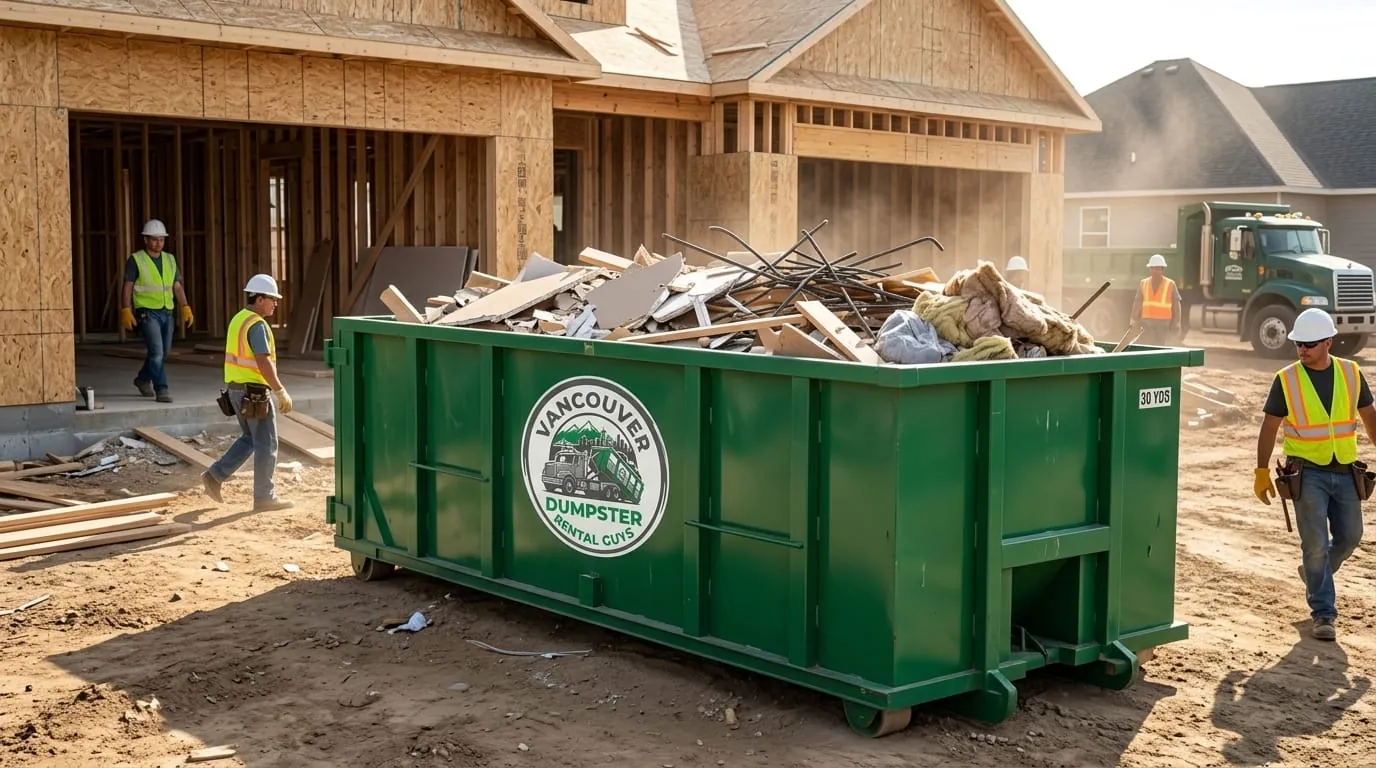
If you've ever stood in front of a pile of torn-out drywall, busted concrete, and old shingles wondering where it all goes, you're not alone. Construction and demolition (C&D) debris is one of the biggest headaches on any Vancouver job site, whether you're a framing crew clearing a remodel or a homeowner finally gutting that 1970s bathroom. Doing it wrong costs you money, slows the job, and can put you crossways with Clark County disposal rules. Doing it right is mostly about planning ahead. Here's how the pros handle it.
What Counts as Construction Debris?
"C&D debris" is a broad bucket, and knowing what's in yours is the first step to disposing of it correctly. Around Vancouver and Clark County, the material coming off a typical job falls into a few families:
- Heavy inert material — concrete, brick, block, asphalt, dirt, rock, and tile.
- Wood — dimensional lumber, plywood, OSB, pallets, and framing offcuts.
- Drywall and gypsum — sheetrock scrap and joint-compound waste.
- Roofing — asphalt shingles, felt, and underlayment.
- Metals — rebar, ductwork, copper, flashing, and old appliances.
- Mixed light debris — insulation, carpet, packaging, and general trash.
- Regulated materials — anything with asbestos, lead paint, or treated wood, plus paints, solvents, and other hazardous waste.
That last group is the one that trips people up. You cannot toss it in a standard roll-off, and mixing it in can contaminate an entire load.
Why You Can't Just Landfill It All
A lot of folks assume every dumpster goes straight to the dump and that's the end of it. In Washington, it's not that simple. The state has long pushed to divert construction and demolition material away from landfills, and Clark County transfer and recycling facilities expect certain materials to be recovered rather than buried. Clean wood, metal, concrete, cardboard, and gypsum all have recycling pathways in the region.
Practical takeaway: the cleaner and better-sorted your debris, the more of it can be recycled, and recycled material almost always disposes cheaper than mixed trash headed for the landfill.
Beyond cost, there are hard rules. Asbestos-containing material must be handled under regulated abatement procedures before any demolition, and you can't rely on a roll-off to make that problem disappear. When you're planning a tear-out, our demolition debris removal team can walk you through what needs special handling before the wrecking bar comes out.
Separate Heavy from Light
The single most important habit on a job site is separating heavy material from light material. Here's why it matters: dumpsters have both a volume limit and a weight limit. Fill a big roll-off with concrete and you'll blow past the weight allowance long before the box looks full, triggering overage fees. Fill that same box with light framing scrap and you'll run out of room while the truck is nowhere near its weight cap.
The fix is to keep dense, inert material in its own dedicated container. Concrete, brick, asphalt, and dirt should go in a smaller, heavy-debris box rated for that load. We rent dedicated concrete and heavy debris containers exactly for this reason, and it usually saves money versus cramming everything into one oversized bin.
A Simple Sorting System for the Site
You don't need a fancy setup. Stage a few zones as the job progresses:
- One roll-off for clean wood.
- One box or pile for metal (scrap yards often pay for this).
- A heavy-debris container for concrete and masonry.
- A mixed C&D dumpster for everything else that can't be cleanly separated.
Even a homeowner doing a single-room remodel benefits from setting aside metal and clean wood rather than burying them in a mixed load.
Debris Type to Handling: Quick Reference
Use this table to plan which stream each material belongs in before the demo starts.
| Debris Type | Best Handling | Notes |
|---|---|---|
| Concrete, brick, block | Dedicated heavy-debris container | Heavy; keep separate to avoid weight overages and enable recycling. |
| Asphalt & dirt | Heavy-debris container | Often recyclable; check for clean fill opportunities. |
| Clean wood & lumber | Wood-only roll-off | Untreated wood is recyclable; keep painted/treated wood separate. |
| Drywall / gypsum | Separate stream when possible | Gypsum has regional recycling; keep dry. |
| Asphalt shingles | Roofing-specific load | Heavy when wet; recyclable at some facilities. |
| Metals | Scrap pile or metal bin | Frequently has resale value; divert from mixed loads. |
| Insulation, carpet, packaging | Mixed C&D dumpster | Light and bulky; fills volume fast. |
| Asbestos, lead paint, treated wood | Regulated abatement / hazmat | Never in a standard roll-off; requires proper handling. |
| Paints, solvents, chemicals | Household/commercial hazardous waste | Take to designated collection; not landfill. |
Right-Sizing Your Dumpster (and Swapping It)
Sizing is where budgets get won or lost. Order too small and you're paying for extra hauls or, worse, letting debris pile up on site. Order too big for heavy material and you're paying to move air. A few rules of thumb for Vancouver jobs:
- 10-15 yard boxes suit heavy, dense loads like concrete and single-room tear-outs.
- 20 yard handles most mid-size remodels and roofing jobs.
- 30-40 yard boxes are built for bulky, lighter debris from large renovations, additions, and full demolitions.
For a whole-house remodel or a framing job generating a lot of volume, a 30-yard dumpster is often the sweet spot. And on longer projects, don't be shy about swaps. Instead of trying to squeeze a month of debris into one container, schedule a swap-out: we haul the full box and drop an empty in one trip. Our construction dumpster rental service is set up for exactly this kind of ongoing rhythm.
Keeping the Job Site Safe and Compliant
A clean site is a safe site, and it's also the one least likely to draw a complaint. A few things to stay on top of:
- Load below the rim. Overloaded, heaped dumpsters can't be legally hauled and can spill in transit. Keep debris level with the top edge.
- Watch placement. Setting a roll-off in the public right-of-way may require a permit in the City of Vancouver. On your own driveway or lot, you're usually fine.
- Keep nails and sharp debris contained. Loose material is both a safety hazard and a nuisance to neighbors.
- Segregate the regulated stuff early. Identify asbestos and lead risks in the planning phase, not mid-demo.
Controlling Cost
Disposal costs come down to weight, volume, and how many hauls you need. You control all three by sorting well. Every ton of clean, recyclable material you keep out of the mixed-trash stream typically disposes cheaper, and every avoided overage is money in your pocket. Separating heavy debris into a properly rated box is the biggest single lever most contractors can pull.
Wet-Weather Site Tips
This is the Pacific Northwest, so plan for rain, especially fall through spring. Wet debris is heavier debris, and that hits your weight-based disposal cost directly. A few Vancouver-specific moves:
- Keep drywall, wood, and cardboard covered or under roof until they go in the box. Soaked gypsum gains weight fast and gets harder to recycle.
- Tarp your open roll-off between work sessions to keep rain out.
- Break down and load material promptly rather than letting piles sit and soak.
- Mind soft ground. A loaded box on saturated soil can sink or rut a driveway; use plywood or planks under the container on soft surfaces.
A little rain management can shave real money off your final disposal bill over a wet-season project.
Get It Hauled the Right Way
Whether you're a contractor juggling multiple sites or a homeowner tackling one big renovation, the formula is the same: identify your debris, separate heavy from light, size your box right, keep it dry, and keep the regulated material out. Handle those and disposal becomes a line item you control instead of a surprise at the end of the job.
Need a container dropped in Vancouver or anywhere in Clark County? Call the Vancouver Dumpster Rental Guys at (360) 360-3683 and we'll help you pick the right size and set up a swap schedule that fits your timeline. Questions about a specific material or job? Reach out through our contact page or just give us a ring.
Founder, Vancouver Dumpster Rental Guys — sharing straight advice from more than 15 years of local hauling experience.