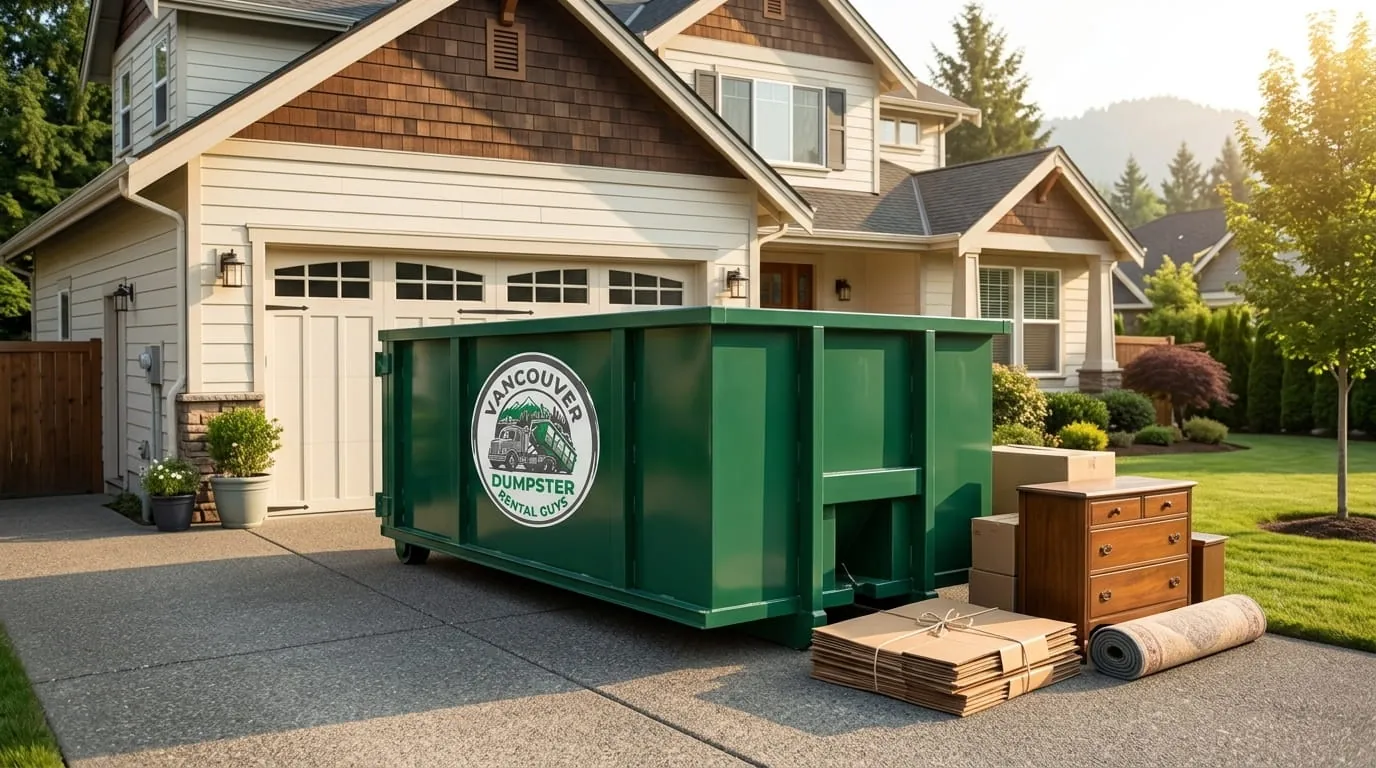
One of the first questions we hear from homeowners across Vancouver and Clark County is simple: do I need a permit before a dumpster shows up in my driveway? The honest, reassuring answer for most residential jobs is no. If your roll-off sits on your own private property, you are almost always in the clear. Permits enter the picture when the container has to occupy a public street or the city right-of-way. Below we break down exactly when a dumpster permit in Vancouver WA matters, how HOA rules can add a layer, and the placement best practices that keep your project smooth and your property protected.
Private Property vs. Public Right-of-Way: The Core Rule
The single biggest factor that decides whether you need a permit is where the dumpster is placed. Think of it in two buckets.
On Your Driveway or Private Land — Usually No Permit
When we drop a roll-off on your driveway, in your yard, or anywhere on land you own or control, the City of Vancouver generally does not require a street-use permit. That covers the vast majority of residential projects we handle: garage cleanouts, bathroom and kitchen remodels, roofing tear-offs, landscaping hauls, and downsizing. If you have room on your own concrete or gravel, you can typically skip the paperwork entirely and get straight to work.
On a Public Street or Right-of-Way — You Likely Need a Permit
If your driveway is too short, too steep, or already full, the next option is placing the container in the street in front of your home. That space, along with the strip between the sidewalk and the curb, is public right-of-way. Setting a large object there almost always requires a street-use or right-of-way permit from the City of Vancouver. If your property sits in an unincorporated part of the county rather than inside city limits, the permitting authority is Clark County instead. Either way, you should confirm the current requirements, fees, and duration limits directly with the City of Vancouver before scheduling.
Rule of thumb: if the dumpster stays on your property, you are usually permit-free. The moment it touches a public street or right-of-way, assume a permit is required and check with the city first.
Why the Street Rule Exists
Public streets belong to everyone, and cities regulate what sits on them to protect traffic flow, emergency access, and neighbor safety. A permit lets the City of Vancouver know a container will be there, for how long, and that it will be marked and placed responsibly. It also protects you: an unpermitted dumpster in the right-of-way can lead to fines or an order to move it, which is the last thing you want mid-project. We would rather help you do it right the first time.
Don't Forget HOA and Neighborhood Rules
Even when the city does not require a permit, your homeowners association might have its own say. Many Clark County subdivisions restrict how long a dumpster can sit out, where it can be placed, and whether it must be screened from view. Some require advance notice to the HOA board. A quick check of your CC&Rs or a message to your property manager can save you a warning letter later. HOA rules are separate from city permits, so it is worth confirming both if you live in a managed community.
Placement Best Practices That Keep You Safe and Legal
Where and how the container sits matters as much as the permit itself. Here is what our crews recommend for every Vancouver WA rental.
Protect the Ground Underneath
A loaded roll-off is heavy, and the steel wheels and rails can leave marks. We place boards or plywood under the container's contact points to spread the weight and shield your driveway. This is especially important on newer concrete, pavers, or asphalt that softens in warm weather. For a deeper look at guarding your surface, see our guide on how to protect your driveway during a dumpster rental.
Keep Sidewalks, Traffic, and Hydrants Clear
Never block a sidewalk, a travel lane, a fire hydrant, or a neighbor's driveway. Pedestrians need a clear path, drivers need sightlines at corners and intersections, and firefighters need unobstructed access to hydrants. If the container must go near the street, position it so it does not force people to step into traffic or obscure a stop sign. These are exactly the conditions a street-use permit is designed to address.
Plan for Wet Pacific Northwest Weather
Vancouver's rainy stretches can turn a lawn or gravel pad into soft, saturated ground. A heavy dumpster can sink or rut into wet soil, so we favor firm, drained surfaces like your driveway during the wetter months. If the only spot available is unpaved, boards become even more important, and we may recommend timing delivery around the forecast. A little planning keeps the container level and easy to load.
Size the Container to the Space
Choosing the right size helps with placement and access. A compact option like our 10-yard dumpster fits neatly on a single driveway and is ideal for smaller cleanouts and remodels, often making the whole permit question moot because it stays fully on your property. If you are unsure which size suits your project and your available space, we are happy to walk you through it.
How Vancouver Dumpster Rental Guys Helps
Permitting does not have to be a headache. When your project calls for street placement, we can point you to the right City of Vancouver or Clark County process, help you understand timing, and coordinate delivery so the container arrives ready to go. For driveway jobs, we handle the heavy lifting of placement and ground protection so you can focus on the work. Explore our full range of services or dig into the details of residential dumpster rental to see how we make cleanup simple for Vancouver homeowners.
Ready to get started or just have a question about placement and permits? Call our local team at (360) 360-3683 and we will help you plan the smoothest possible rental.
The Bottom Line
For most residential projects in Vancouver, WA, a dumpster on your driveway or private property needs no permit at all. Save the paperwork worry for jobs that require placing the container in a public street or right-of-way, where a street-use permit from the City of Vancouver, or Clark County for unincorporated areas, is likely required. Always confirm current rules with the city, mind your HOA guidelines, and follow smart placement practices to keep everything safe, legal, and easy. When you are ready, our crew is one call away.
Questions about your specific address or setup? Reach out through our contact page or call (360) 360-3683 today.
Founder, Vancouver Dumpster Rental Guys — sharing straight advice from more than 15 years of local hauling experience.