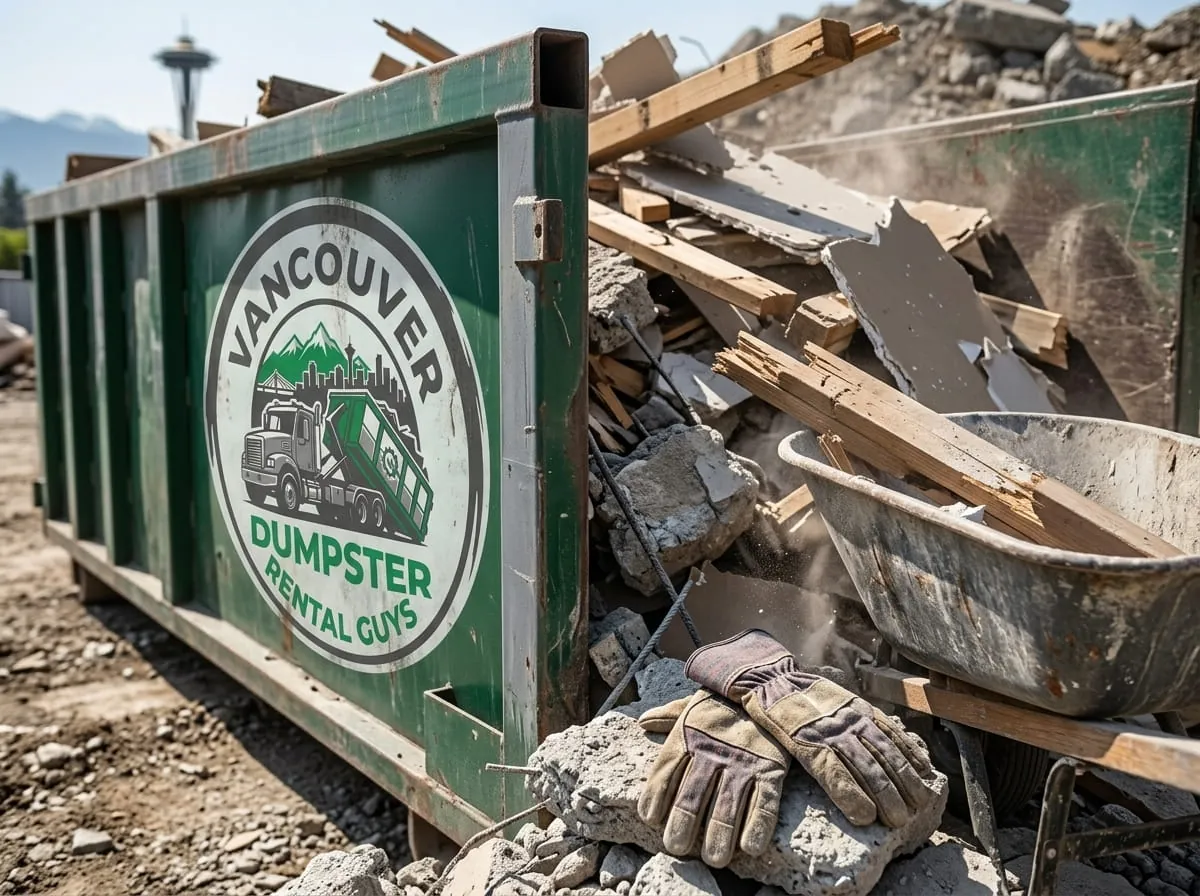
One of the first questions we hear from folks across Vancouver and Clark County is simple: "Can I just throw everything in the dumpster?" The honest answer is almost. A roll-off dumpster handles the vast majority of what comes out of a home, a remodel, or a cleanout, but a short list of items are prohibited for safety, legal, and weight reasons, some of them specific to Washington State.
This guide lays out exactly what can go in a dumpster, what can't, and just as important, why. Knowing the rules up front keeps your rental affordable, avoids overage or contamination fees, and keeps you on the right side of Washington's disposal laws.
What You Can Put in a Dumpster
The good news: most everyday junk and project debris is fair game. Here in Vancouver, our roll-offs are built for the bulky, heavy, awkward stuff that won't fit in your curbside cart.
Household junk and furniture
Cleaning out a garage, basement, or whole house? Toss it in. Old couches, mattresses, dressers, tables, toys, clothing, boxes, and general clutter are all welcome. If you're staring down a big pile and don't want to lift a finger, our junk removal service can load it for you.
Renovation and construction debris
Remodels generate a lot of waste, and dumpsters eat it up: lumber and scrap wood, drywall, plaster, tile, flooring, cabinetry, countertops, siding, insulation, windows, and doors. For larger builds and tear-outs, a construction dumpster rental keeps the jobsite clean and your crew moving.
Roofing material
Asphalt shingles, underlayment, and tear-off debris are all acceptable. Roofing is heavy, though, so most tear-offs need a dedicated size and a weight allowance planned in advance, just ask us and we'll size it right.
Yard and green waste
Branches, brush, leaves, shrubs, sod, and general landscaping debris are fine in most cases. Because green waste is often recycled or composted separately in the Pacific Northwest, let us know if your load is all yard waste so we can route it correctly.
Most non-hazardous materials
As a rule of thumb, if it's a solid, non-hazardous item that isn't on the prohibited list below, it can go in. When you're unsure, a quick call to (360) 360-3683 settles it before you load.
Rule of thumb for Clark County: if it's a solid, everyday material and it isn't hazardous, toxic, or extremely heavy, it almost certainly belongs in the dumpster. The short prohibited list below is the exception, not the rule.
What You Can't Put in a Dumpster
The prohibited list is short but strict. These items are banned because they're hazardous, illegal to landfill, or so heavy they damage equipment and roads. Washington regulates several of them directly.
Hazardous waste, paint, and chemicals
Landfills aren't built to contain toxic materials, and they can leach into the soil and groundwater we all share. Keep out solvents, pesticides, motor oil, antifreeze, pool chemicals, and wet or liquid paint. Clark County residents can take these to a household hazardous waste facility; a small charge often applies. Dried-out latex paint (fully hardened with cat litter or a hardener) is sometimes accepted, confirm with your facility first.
Tires and batteries
Tires trap gases and "float" to the surface of landfills, so they're banned statewide, most tire shops take them back for a small fee. Car, marine, and rechargeable batteries contain acid and heavy metals; auto parts stores and recyclers accept them, frequently for free.
Appliances with refrigerant
Refrigerators, freezers, AC units, and dehumidifiers contain refrigerants that must be professionally recovered before disposal, it's a federal requirement. We can still haul these; we just handle them separately from the dumpster load.
Electronics (E-waste)
Washington runs the E-Cycle Washington program, which makes recycling many electronics free for residents. TVs, computers, monitors, laptops, and tablets are banned from the trash and must go through an E-Cycle drop-off site. There are collection points serving Vancouver and Clark County. Our Vancouver WA recycling and disposal guide covers where to take them.
Asbestos
Asbestos is a regulated, hazardous material that requires certified abatement and special disposal, never place it in a dumpster. If you suspect asbestos in old insulation, popcorn ceilings, vinyl flooring, or pipe wrap, stop and call a licensed abatement contractor.
Wet concrete, dirt, and heavy fill
These aren't hazardous, they're just extremely heavy. A dumpster full of concrete, brick, dirt, or gravel can exceed road-legal weight limits and can't be lifted safely. That's why heavy inert material goes in a dedicated, smaller concrete and heavy debris bin sized for the weight. Mixing it into a general load almost always triggers overage fees.
Allowed vs. Prohibited: The Quick Reference
| Allowed in the Dumpster | Prohibited / Needs Special Handling |
|---|---|
| Household junk & clutter | Hazardous waste & chemicals |
| Furniture & mattresses | Wet paint, solvents, oils |
| Wood, lumber & scrap | Tires |
| Drywall, tile & flooring | Batteries (auto & rechargeable) |
| Roofing shingles | Appliances with refrigerant |
| Yard & green waste | Electronics / e-waste (E-Cycle WA) |
| Renovation & demo debris | Asbestos |
| Most non-hazardous solids | Wet concrete, dirt & heavy fill |
What to Do With Prohibited Items
Being told "no" isn't the end of the road, most prohibited items have a clear, local home:
- Hazardous waste, paint, chemicals: Clark County household hazardous waste collection.
- Electronics: A free E-Cycle Washington drop-off site.
- Tires: Your local tire shop or a designated recycling event.
- Batteries: Auto parts stores and battery retailers.
- Appliances with refrigerant: Ask us, we can haul them with proper handling.
- Concrete, dirt, heavy fill: A dedicated heavy-debris bin.
Not sure which pile something belongs in? Don't guess. A 60-second call to (360) 360-3683 can save you a contamination fee and a return trip.
The Vancouver WA Bottom Line
For the overwhelming majority of projects, from a garage purge to a full kitchen gut, a single roll-off dumpster handles it all. Just keep the short prohibited list in mind: no hazardous materials, no refrigerant appliances, no e-waste, no asbestos, and keep heavy concrete and dirt in their own dedicated bin.
When you're ready to book, or you just want to talk through what's going in the container, our local team is happy to help. Reach out through our contact page or call (360) 360-3683 and we'll match you with the right dumpster for the job across Vancouver and Clark County.
Founder, Vancouver Dumpster Rental Guys — sharing straight advice from more than 15 years of local hauling experience.