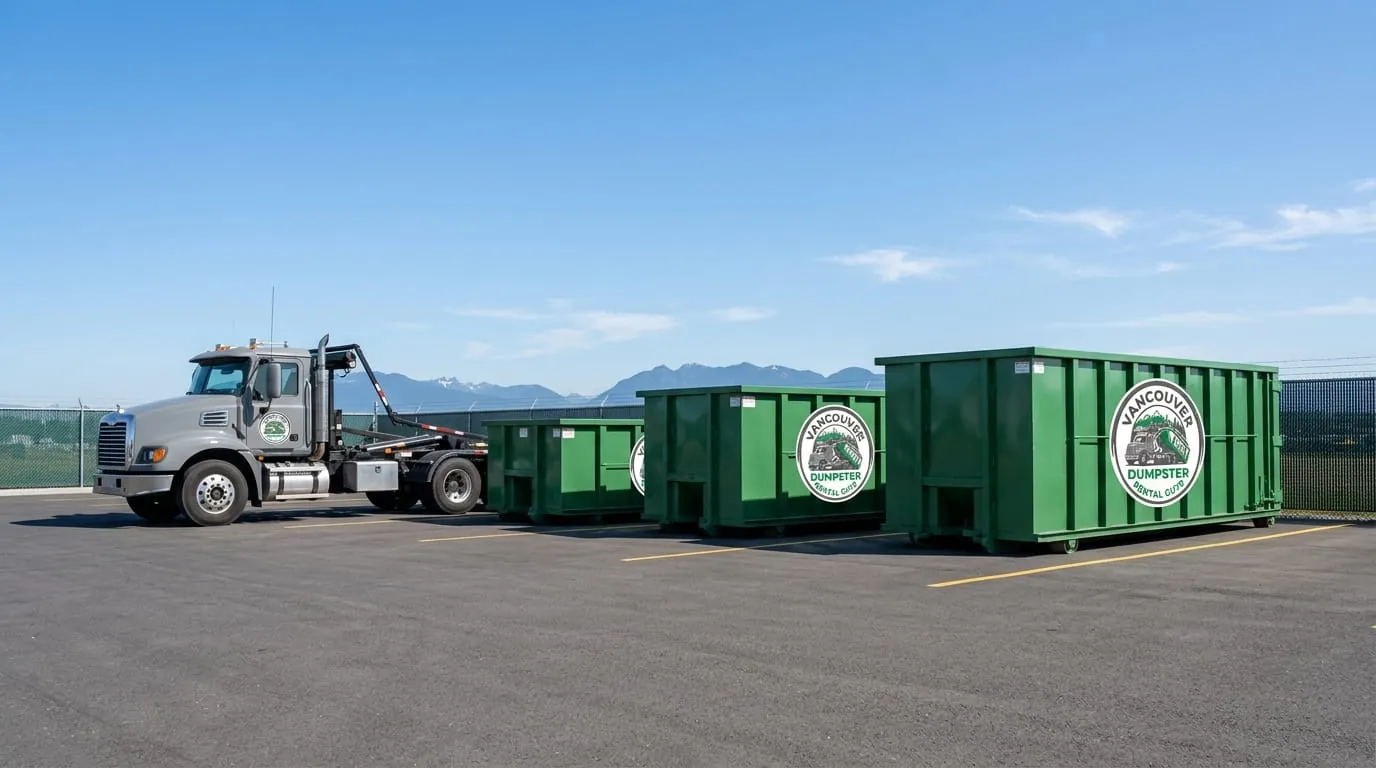
A roof tear-off looks straightforward until the debris starts hitting the ground. Old shingles, felt, and flashing pile up fast, and the single biggest mistake homeowners and even some crews make in Vancouver WA is renting the wrong dumpster for the job. Too small and you're paying for a second haul. Too big and you're paying for capacity you can't legally fill because you hit the weight limit first. This guide walks through how to size a roofing dumpster in Vancouver WA the right way — by squares and layers, not by how the pile looks in your head.
Why Shingle Debris Is Deceptively Heavy
Here's the thing most people get wrong: roofing debris is one of the densest materials you'll ever throw in a dumpster. A cubic yard of loose household junk might weigh 150 to 200 pounds. A cubic yard of asphalt shingles can weigh close to a ton. That difference is exactly why roofing jobs blow past weight limits long before the box looks full.
Asphalt shingles are essentially fiberglass mat saturated with asphalt and coated in mineral granules — heavy by design, because that weight is what keeps them on your roof through PNW wind and rain. When you tear them off, all that density goes straight into the bin. This is why a roofing dumpster gets weighed, not just measured. You can have three feet of empty space above the debris line and still be over your tonnage.
Roofers Talk in "Squares"
Roofing is measured in squares, where one square equals 100 square feet of roof area. A typical single-story home might have 20 to 30 squares. The rough rule of thumb: a single layer of asphalt shingles weighs somewhere in the neighborhood of 230 to 250 pounds per square once torn off, and that climbs with heavier architectural (dimensional) shingles.
Two things drive your total weight: the number of squares and the number of layers. Older Vancouver homes sometimes have two or even three layers of shingles stacked up from previous re-roofs that skipped the tear-off. If you've got a 25-square roof with two layers, you're planning for roughly double the debris weight of a single-layer job. Count your layers before you count anything else — it's the number that catches people off guard.
Sizing by Weight, Not Just Volume
Because shingles are so dense, the winning move is almost always a smaller bin used within its weight allowance rather than an oversized box you can only half-fill. A 10 or 15 yard dumpster is built and rated for heavy, dense material like roofing and concrete. Filling it to its weight limit is more cost-effective than renting a 30 or 40 yard box, hitting the tonnage cap when it's a third full, and paying overage on top.
For most residential roofing tear-offs in Vancouver WA, a 10 to 15 yard dumpster is the sweet spot. You'll reach the weight limit right around the time the box is full — which is exactly how it's supposed to work.
Here's a practical starting point. Every job is different, and layers, shingle type, and added decking or wood will shift these numbers, so treat this as a conversation starter rather than gospel:
| Roof Size (single layer) | Approx. Squares | Suggested Bin |
|---|---|---|
| Small home / garage / shed | Up to 15 squares | 10 yard |
| Average single-story home | 15–25 squares | 15 yard |
| Larger home, single layer | 25–35 squares | 15 yard (may need two loads) |
| Any roof with 2+ layers | Multiply weight accordingly | Call to size it right |
Notice there's no giant box on that list. For pure shingle weight, bigger is rarely better. If your job also includes plywood decking replacement, rotten fascia, or a tear-out of skylights, tell us up front — that added bulk changes the math and might justify a second bin or a different plan. Not sure where your roof lands? Our guide to choosing a dumpster size breaks it down further, or just call and we'll size it with you.
Compare the Common Roofing Sizes
The two workhorses for tear-offs are the 10 yard dumpster and the 15 yard dumpster. The 10 yard is compact enough to tuck into a tight driveway and is ideal for a garage roof or a small single-layer home. The 15 yard gives you more room for an average-to-larger home while still being rated for the density of roofing debris. Both are low-profile, which matters more than you'd think when you're throwing shingles down from a ladder.
Placing the Bin Close to the Work
Every foot a shingle has to travel is a foot of wasted labor. The goal is to drop the dumpster as close to the eave of the section you're tearing off as safely possible, so crews can toss debris directly into the box instead of shuttling it across the yard in wheelbarrows.
Protect your surfaces. Ask your driver to set the bin on boards or plywood — typically two-by-tens or sheets of OSB laid under the wheels and contact points. This spreads the load and keeps the steel from cracking or staining a concrete driveway or gouging asphalt, which softens in the summer heat. It's a five-minute step that saves you a repair bill.
A few placement tips specific to the work:
- Position the bin so the open end or door faces the debris slide path, not a fence or the house.
- Keep it out from under power lines and low branches — you need clear airspace to throw and for the truck to lift it.
- Leave room for the delivery truck to swing in straight; a bin dropped at an angle in a tight spot is hard to load evenly.
- If the roof has multiple faces, stage the bin at the section with the most squares so the heaviest hauling is the shortest.
Load the debris evenly and low. Because you'll hit weight before volume, there's no prize for stacking shingles high. Spread them across the floor of the box so the load balances for transport.
PNW Roofs: Moss, Wet Decking, and Hidden Weight
Vancouver's climate adds a wrinkle you won't find in a Phoenix roofing guide. Our long wet season means north-facing roof slopes and shaded sections grow moss, and moss holds water. Wet, moss-laden shingles weigh noticeably more than dry ones, and a tear-off after a rainy stretch can push your tonnage higher than the same roof would in August.
Moisture is the quiet villain here. Beyond the moss itself, a PNW tear-off often uncovers rotted or waterlogged decking underneath old shingles — especially around valleys, chimneys, and skylights where water pools. That wet plywood is heavy, and it wasn't in your original weight estimate. Build a little buffer into your plan for it. If you're tearing off in the wet months, assume the debris is at the heavier end of the range and lean toward reaching the weight limit sooner.
One more local note: don't let torn-off moss and shingle grit wash into the storm drain. Tarp the ground around your work zone and sweep the granules into the bin. It keeps the driveway safe underfoot and keeps debris out of Clark County's stormwater system.
Working With Your Roofer
If you've hired a roofing contractor, ask early whether the dumpster is included in their bid or is on you. Both are common. When it's on you, coordinate timing tightly — you want the empty bin on-site the morning the tear-off starts and a swap or pickup lined up if it's a multi-day job. A crew standing around waiting on a dumpster is a crew you're paying to wait.
Give your roofer the bin's weight limit so they can plan the load, and ask them for their square-and-layer count so you can size accurately. Good crews know exactly how heavy their debris runs and will tell you straight. If you're managing the whole project yourself, our roofing dumpster rental service is set up specifically for tear-offs — rated bins, driveway-friendly placement, and honest weight guidance for Vancouver WA and Clark County.
Avoiding Overage Fees
Overage fees happen when your debris exceeds the included tonnage on your rental. With roofing, that's the risk that matters most because the material is so dense. Here's how to stay clean:
- Count layers honestly. A hidden second layer is the number-one cause of surprise overage. Peek at an edge or a vent boot before you rent.
- Factor in the wet season. Moss and damp decking add weight that dry-weather estimates miss.
- Don't over-order volume to "be safe." A bigger box doesn't raise your weight allowance proportionally the way you'd hope — it just costs more up front. Size to weight.
- Keep the load roofing-only. Tossing yard waste, old furniture, or concrete into a roofing bin eats your tonnage and can trigger mixed-material issues.
- Ask up front. Tell us your squares and layers and we'll tell you the weight allowance you need before anything gets delivered.
The best defense against overage is a five-minute phone call before the bin shows up. We'd rather size it right the first time than surprise you at pickup.
Get It Sized Right — Call the Local Crew
Roofing tear-offs reward planning. Count your squares, count your layers, respect how heavy PNW shingles really are, place the bin close on boards, and match the box to the weight — not to the size of the pile in your imagination. Do that and you'll avoid both the second-haul headache and the overage-fee sting.
Ready to line up your roofing dumpster in Vancouver WA? Call Vancouver Dumpster Rental Guys at (360) 360-3683 and we'll size it with you, or reach out through our contact page. Local, roofing-savvy, and straight with you on weight — that's the whole point.
Founder, Vancouver Dumpster Rental Guys — sharing straight advice from more than 15 years of local hauling experience.